Which School of Nursing is one of only two selected as QSEN (Quality & Safety Education for Nurses) Exemplar School?
You guessed it -- the USF School of Nursing!
Based on the data provided on the QSEN Institute Annual Post Assessment, the University of San Francisco has been selected as a QSEN Exemplar for its implementation of the QSEN competencies into the curriculum. Out of 22 schools participating, only 2 were selected as exemplars.
This is wonderful news and indeed a deserved recognition of the great work
of our QSEN team and a way to affirm our commitment to continue to advance the QSEN priorities.
Sunday, June 19, 2011
Thursday, June 9, 2011
AACN's CNL Coach Meets with Bay Area CNOs at USF
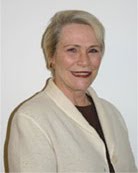
Linda Rusch, MS, RN, is AACN’s new CNL Resource Coach who is available to help advance the CNL role at the local and national level. Linda can assist you in planning, in the communication-and-roll-out phase, and in the actual implementation of the CNL within the practice environment. She can also assist with financial justification, outcome measurement, and advise you on how to support the CNL over time. Linda has over 30 years experience in nursing administration and has served as the chief nursing officer (CNO) and vice president of patient care services at Hunterdon Medical Center in Flemington, NJ. Because of her efforts, Hunterdon Medical Center was at the forefront of the CNL movement and employed the first group of graduates from the College of New Jersey’s CNL program. Linda has given countless presentations across the country on various nursing topics, including “Making the Business Case for the Clinical Nurse Leader” at the recent CNL Conference in Tucson, AZ.


Wednesday, May 11, 2011
4th Annual CNL Conference: An Implementation Toolkit for the CNL Role
From June 10th - 11th, the University of San Francisco School of Nursing
will host the 4th annual CNL Conference: An Implementation Toolkit for the CNL Role. This year, USF will be joined by the Clinical Nurse Leader Association (CNLA) in
presenting a dynamic conference highlighting the impact of the role
as well as developing a toolkit for CNLs to use.
Our goal is to provide a working toolkit for implementing the CNL role.
The conference offers a platform for CNLs, managers, educators, and practice partners to share their successes, challenges, and outcomes of the CNL model. Articulate and knowledgeable individuals associated with the CNL role on a national level will be featured including: James Harris, Daniel O’Neal, Linda Rusch, and Mary Stachowiak.
For more information or to submit an abstract:
www.usfca.edu/nursing/cnl2011
will host the 4th annual CNL Conference: An Implementation Toolkit for the CNL Role. This year, USF will be joined by the Clinical Nurse Leader Association (CNLA) in
presenting a dynamic conference highlighting the impact of the role
as well as developing a toolkit for CNLs to use.
Our goal is to provide a working toolkit for implementing the CNL role.
The conference offers a platform for CNLs, managers, educators, and practice partners to share their successes, challenges, and outcomes of the CNL model. Articulate and knowledgeable individuals associated with the CNL role on a national level will be featured including: James Harris, Daniel O’Neal, Linda Rusch, and Mary Stachowiak.
For more information or to submit an abstract:
www.usfca.edu/nursing/cnl2011
Tuesday, April 26, 2011
Tuesday, March 22, 2011
2011 Faculty Loan Repayment Program (FLRP)
The Health Resources and Services Administration is pleased to announce the opening of the 2011 Faculty Loan Repayment Program (FLRP) application cycle. The application cycle opens today and will remain open until 5:00 pm May 6, 2011.
Visit the FLRP website (http://www.hrsa.gov/loanscholarships/repayment/Faculty/index.html) for more information and to begin the application process. If you have specific questions, please call us at 1-800-221-9393 or email CallCenter@hrsa.gov.
Faculty Loan Repayment Program
Bureau of Clinician Recruitment and Service
Health Resources and Services Administration
Rockville, MD
Visit the FLRP website (http://www.hrsa.gov/loanscholarships/repayment/Faculty/index.html) for more information and to begin the application process. If you have specific questions, please call us at 1-800-221-9393 or email CallCenter@hrsa.gov.
Faculty Loan Repayment Program
Bureau of Clinician Recruitment and Service
Health Resources and Services Administration
Rockville, MD
Tuesday, February 22, 2011
Master's Degree in Public Health Offered in Fall 2011
The University of San Francisco is launching a new degree program which will combine our strength in health professions with our commitment to community with a new Master's degree program beginning in Fall 2011. The Master of Public Health (MPH) degree will be housed in the School of Nursing and is designed to prepare graduates as leaders in public health practice.
Upon completion of the MPH program, the graduate will be able to:
1. Enhance health in human populations through organized community effort.
2. Identify and assess public health needs of populations with a focus on strategies and practices with a prevention orientation.
3. Utilize an ecological approach that recognizes the interactions and relationships among multiple determinants of health, including environmental conditions and locale.
4. Utilize epidemiology data to assess community needs and policy program implications, including distributions and determinants of disease, disabilities and death in human populations, the characteristics and dynamics of human populations, the natural history of disease, and biologic and nutritional basis of health.
5. Demonstrate competence in collection, storage, retrieval, analysis and interpretation of health data, design and analysis of health-related surveys and experiments.
6. Successfully plan, organize, manage and evaluate culturally competent public health programs including consideration of the policy and legal aspects that advance or inhibit effective implementation.
7. Utilize knowledge and skill from the social and behavioral sciences to identify and create solutions to public health problems and propose and address research questions.
8. Employ effective problem-solving skills, interprofesssional communication and collaboration in public health practice.
9. Develop and evaluate effective strategies for managing the ethical dilemmas inherent in public health practice, advancing information technology, and conducting public health research.
10. Develop leadership, career, and professional development skills in order to promote lifelong learning.
11. Focus on the global and locale factors impacting public health of communities and demonstrate cultural competence as a practitioner.
12. Advance the mission and core values of the University of San Francisco.
Applications will be accepted from March 1 until June 15. Apply here!
Upon completion of the MPH program, the graduate will be able to:
1. Enhance health in human populations through organized community effort.
2. Identify and assess public health needs of populations with a focus on strategies and practices with a prevention orientation.
3. Utilize an ecological approach that recognizes the interactions and relationships among multiple determinants of health, including environmental conditions and locale.
4. Utilize epidemiology data to assess community needs and policy program implications, including distributions and determinants of disease, disabilities and death in human populations, the characteristics and dynamics of human populations, the natural history of disease, and biologic and nutritional basis of health.
5. Demonstrate competence in collection, storage, retrieval, analysis and interpretation of health data, design and analysis of health-related surveys and experiments.
6. Successfully plan, organize, manage and evaluate culturally competent public health programs including consideration of the policy and legal aspects that advance or inhibit effective implementation.
7. Utilize knowledge and skill from the social and behavioral sciences to identify and create solutions to public health problems and propose and address research questions.
8. Employ effective problem-solving skills, interprofesssional communication and collaboration in public health practice.
9. Develop and evaluate effective strategies for managing the ethical dilemmas inherent in public health practice, advancing information technology, and conducting public health research.
10. Develop leadership, career, and professional development skills in order to promote lifelong learning.
11. Focus on the global and locale factors impacting public health of communities and demonstrate cultural competence as a practitioner.
12. Advance the mission and core values of the University of San Francisco.
Applications will be accepted from March 1 until June 15. Apply here!
Wednesday, February 2, 2011
The Answer is the School of Nursing, #7
Which School of Nursing has launched the first executive-level Doctor of Nursing Practice program in the United States? That's right, the USF School of Nursing!
The ELDNP program is a dynamic and engaging 6-semester academic exploration that prepares the nurse executive for the multiple dimensions of administrative responsibilities within varied healthcare environments. Content is structured in an innovative hybrid format, integrating the best practices of classroom and computer-assisted instruction.
This program is designed specifically for current nurse executives at the division level or above with supervisory oversight of a group of essential services or functions. This degree extends and enhances the knowledge, skill and performance of these healthcare system leaders in a wide variety of clinical and administrative environments. The curriculum for executive leadership is based on the AACN Essentials for DNP, in addition to the AONE core competencies for nursing executives. The curriculum also conforms to the standards and expectations set forward by Council on Graduate Education for Administrative Nursing (CGEAN), the American Nurses Association, and the National Center for Healthcare Leadership (NCHL) Health Leadership Competency Model.
Effective executive practice requires substantial knowledge of business, finance, labor relations, strategic leadership, organizational development, and healthcare policy, and the ELDNP is an advanced-level practice degree that emphasizes application of research to clinical nursing practice at the highest administrative levels.
The second cohort of the ELDNP program will begin in January 2012. Applications will be collected in Fall 2011.
The ELDNP program is a dynamic and engaging 6-semester academic exploration that prepares the nurse executive for the multiple dimensions of administrative responsibilities within varied healthcare environments. Content is structured in an innovative hybrid format, integrating the best practices of classroom and computer-assisted instruction.
This program is designed specifically for current nurse executives at the division level or above with supervisory oversight of a group of essential services or functions. This degree extends and enhances the knowledge, skill and performance of these healthcare system leaders in a wide variety of clinical and administrative environments. The curriculum for executive leadership is based on the AACN Essentials for DNP, in addition to the AONE core competencies for nursing executives. The curriculum also conforms to the standards and expectations set forward by Council on Graduate Education for Administrative Nursing (CGEAN), the American Nurses Association, and the National Center for Healthcare Leadership (NCHL) Health Leadership Competency Model.
Effective executive practice requires substantial knowledge of business, finance, labor relations, strategic leadership, organizational development, and healthcare policy, and the ELDNP is an advanced-level practice degree that emphasizes application of research to clinical nursing practice at the highest administrative levels.
The second cohort of the ELDNP program will begin in January 2012. Applications will be collected in Fall 2011.
Subscribe to:
Posts (Atom)


